After having tested a lot of TVs, I’ve started to expect a certain compromise when it comes to sound. No matter how good the panel is, built-in speakers are usually the weakest link. The Samsung S95F OLED TV that I reviewed recently has a competent built-in speaker system, but pairing it with the Samsung HW-Q990F soundbar, which arrived alongside the TV, changed the experience noticeably. The Q990F is a full 11.1.4-channel system, made up of a main bar with front and upward-firing drivers, a wireless subwoofer, and two rear speakers that handle both surround and height channels. It supports Dolby Atmos and DTS X passthrough, offers multiple HDMI 2.1 ports with 4K at 120Hz support, and includes features such as SpaceFit Sound Pro room calibration and Q-Symphony.
Used together, the Samsung S95F OLED TV and HW-Q990F soundbar feel like a perfect pair. What follows is how this pairing held up in real-world use, and what it is like living with the HW-Q990F as part of a home setup.
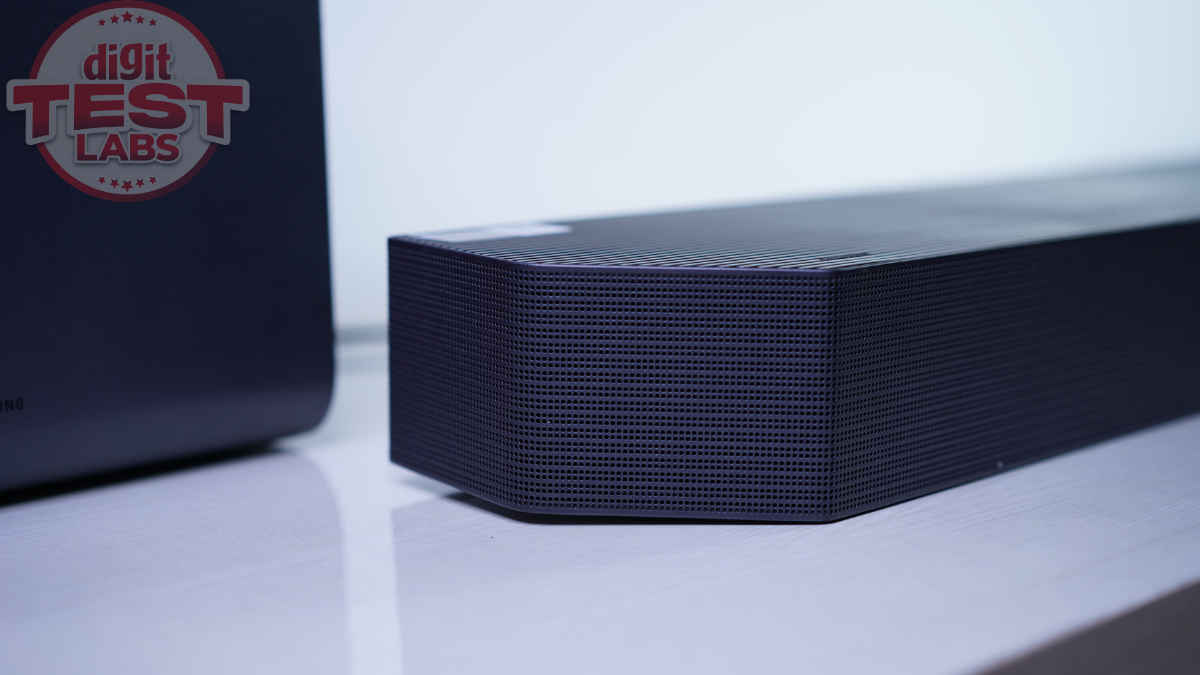
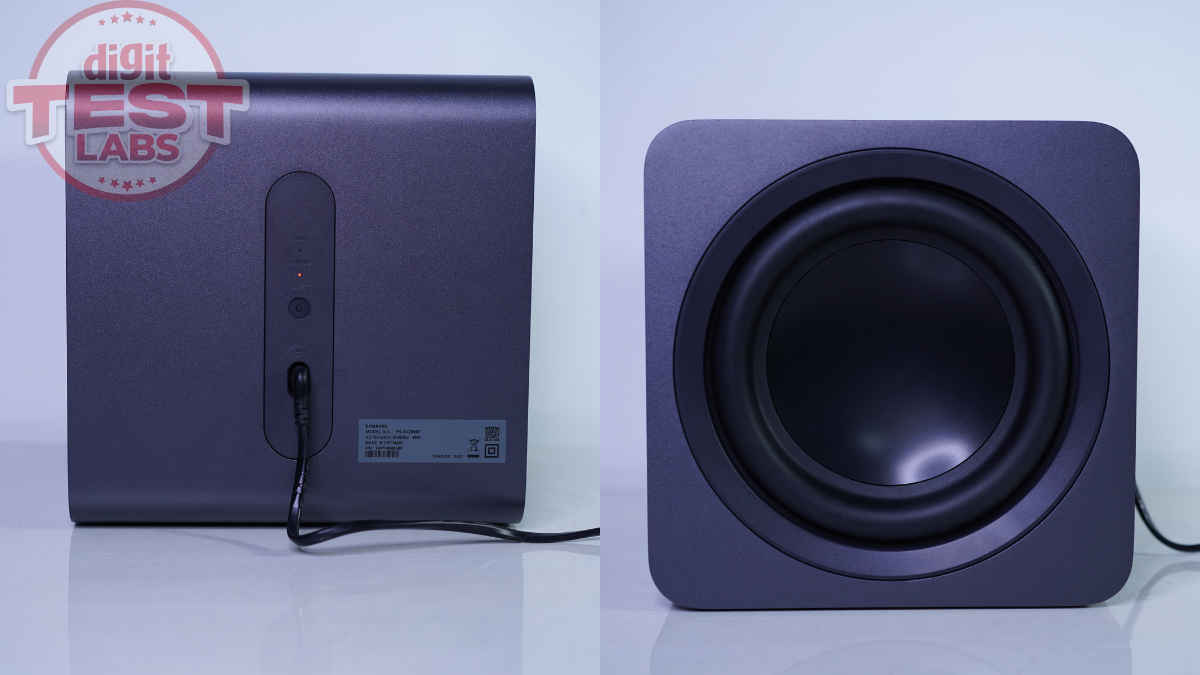
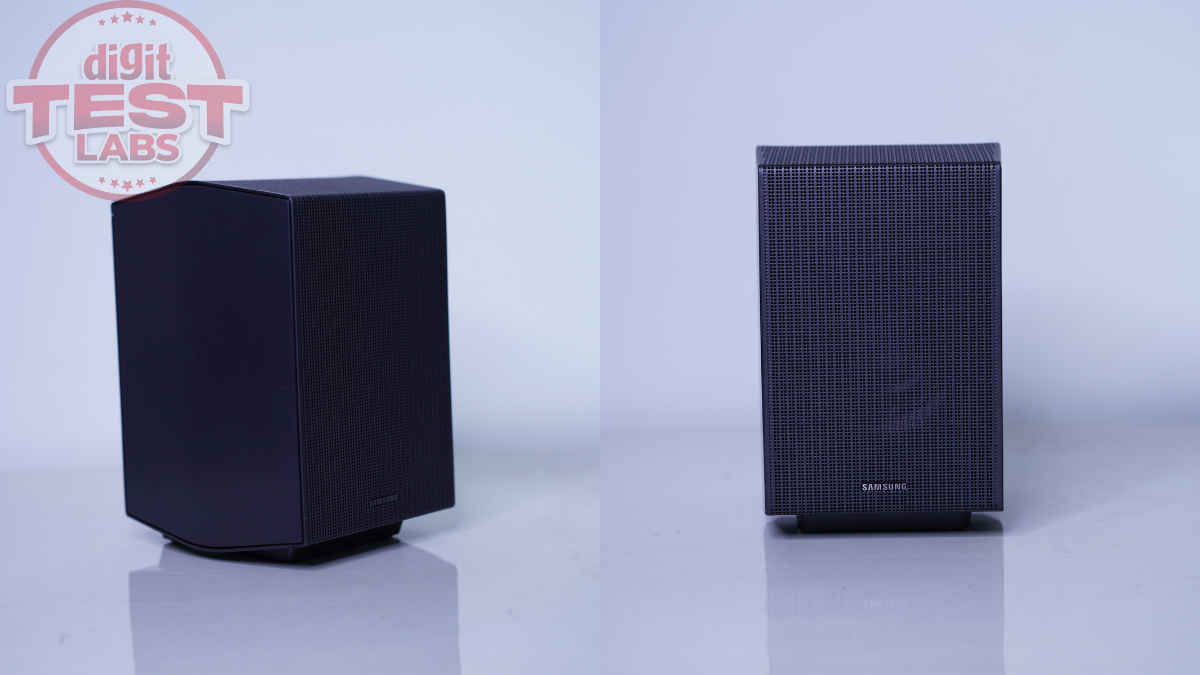
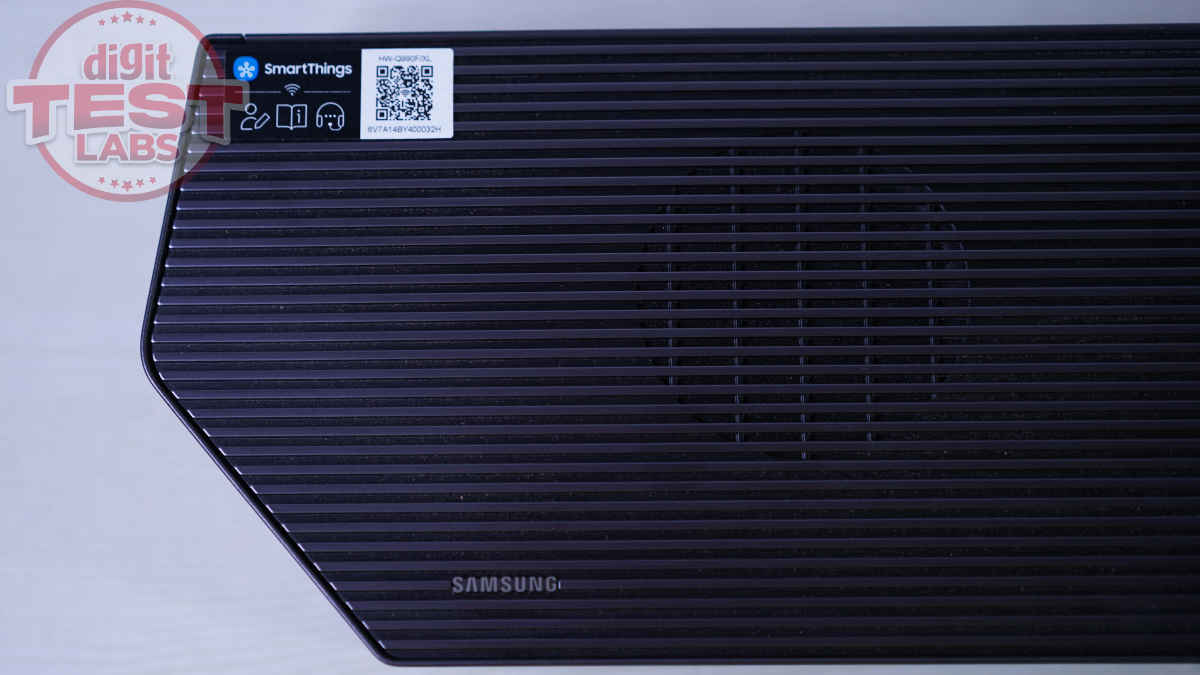
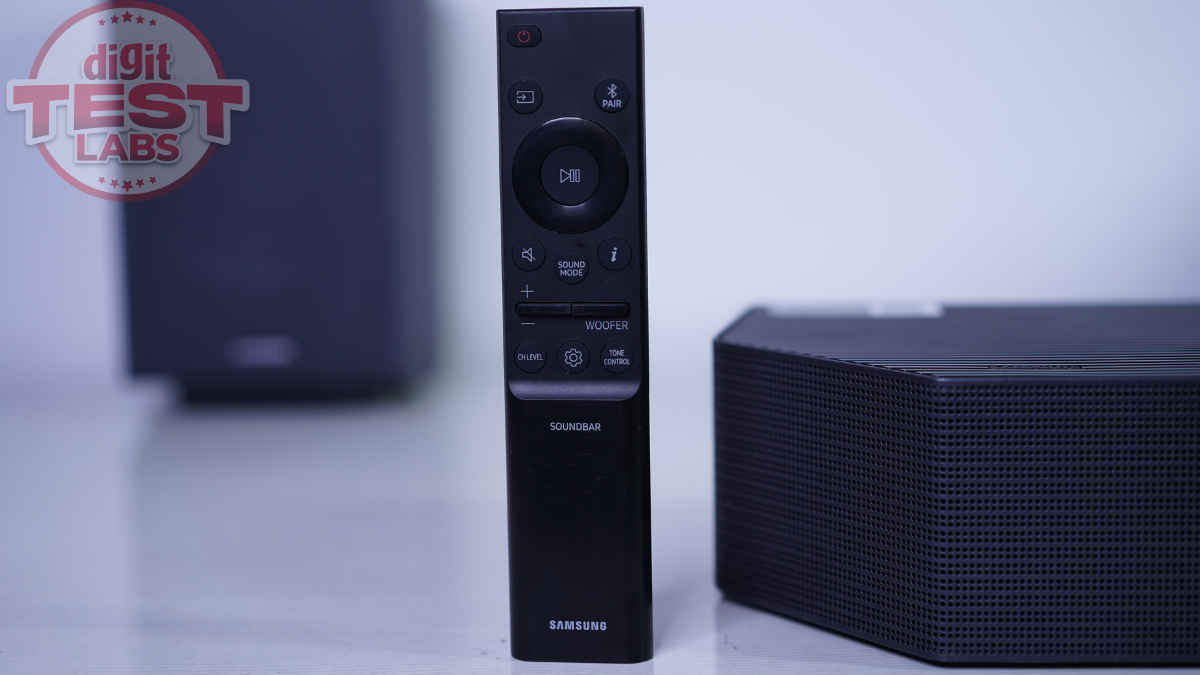
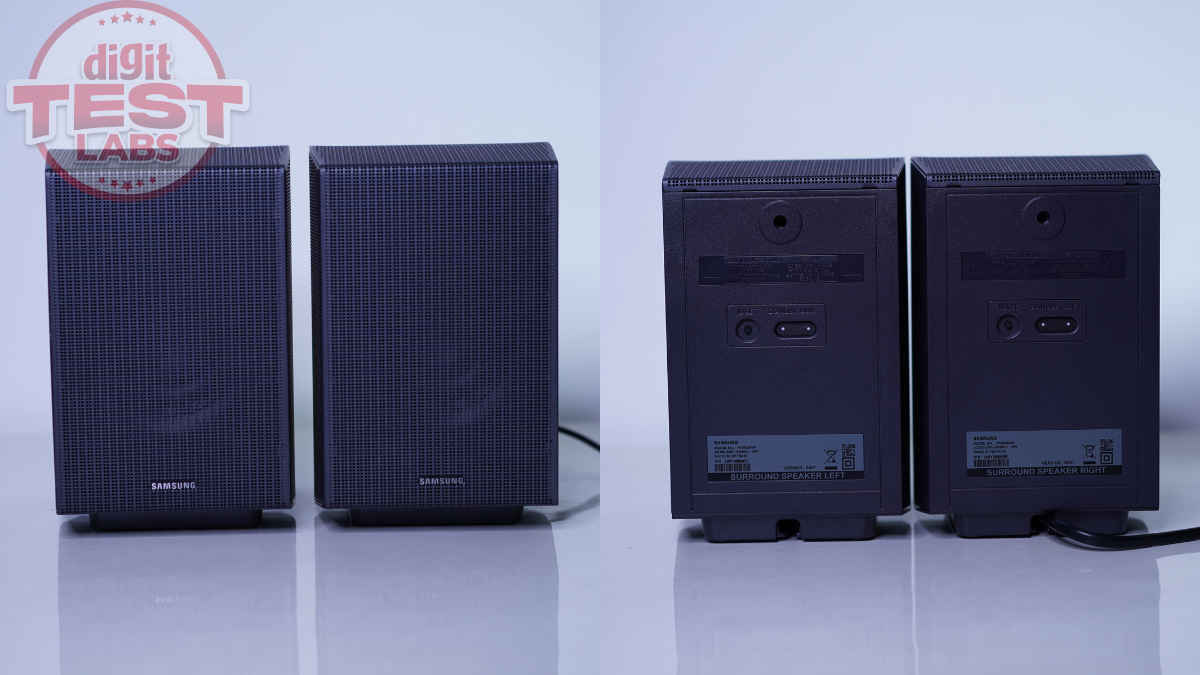
The Samsung HW-Q990F soundbar setup and its remote come in a matte black colour. The main bar is wide, but the black finish and minimal branding let it blend easily under a large TV. The subwoofer is big but smaller than the Q990D subwoofer. The two rear speakers are relatively smaller and share the same understated design language. All these speaker units have cavities to somewhat tuck away the cables. But some of those cables may still appear.
During my use, I noticed the black surfaces of these devices can get dirty easily. Perhaps that may not be the case in your home environment. And, you can also wall-mount the setup for a cleaner arrangement.
The wall-mount hardware, all these speakers, a remote, its batteries and cables come in neatly packed in a long cardboard box with Styrofoam protection. One of these is an Ultra High Speed HDMI cable, which can be used for eARC connection with compatible TVs.
The initial setup was less intimidating than an 11.1.4 spec might suggest. You just have to take out the devices, place them and connect them via the given cables. They power up and connect to the main unit automatically. You will see a solid blue LED indication for successful connection. You just have to connect the Samsung HW-Q990F soundbar to the TV via HDMI (eARC preferably) or other options like Bluetooth. The system does the rest of the work on its own. The Bluetooth pairing was instant in my case.
HDMI connectivity is fine for a soundbar, with an HDMI 2.1 Out (eARC supported), two HDMI 2.1 In ports that pass through 4K videos at 120Hz cleanly. That matters if you are running a console or gaming PC through the bar instead of directly into the TV.
In daily use, the system stayed stable. No random dropouts, no re-pairing issues, and no moments where the bar felt confused about the source.
Also, with the S95F OLED TV, Q-Symphony kicked in without friction, letting the TV speakers work in sync with the soundbar rather than being disabled.
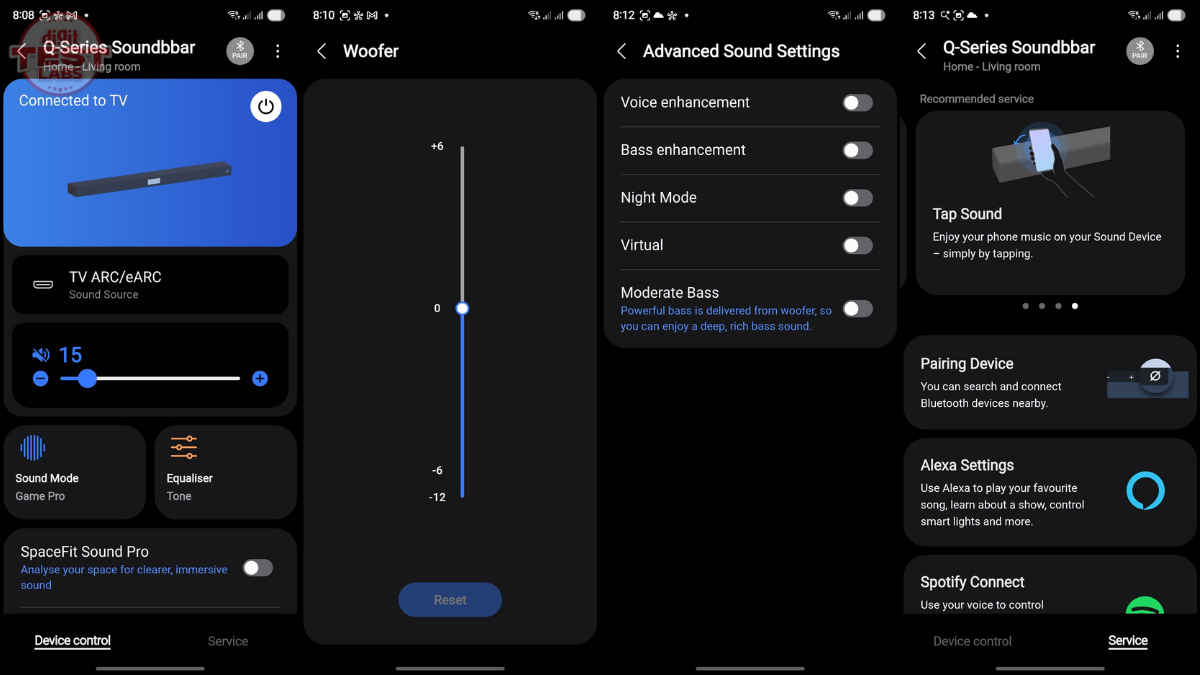
You can control the Samsung HW-Q990F soundbar with the bundled remote or through the SmartThings app on your phone. There are some manual controls on the main bar, such as volume up and down. If you have a compatible Samsung TV, you can also control many of the settings using the TV remote. You have more controls with the default remote, like Sound Mode, Tone Control, Input devices, Woofer level, Channel levels, Bluetooth Pair button, Mute button, and the Settings menu.
You can also use the SmartThings app, which remains Samsung’s control hub. It lets you enable SpaceFit Sound Pro (which calibrates sound with respect to your room), Voice Enhancement, Bass Enhancement, etc. The app also activates the Alexa voice assistant. This worked when the soundbar was paired to the S95F OLED TV, but not when connected to my Galaxy S23 phone.
Well, you can play music through the assistants on the connected device, like Gemini, Siri, etc. I tend to just say the assistant hot word followed by the music playback request. It worked like a charm. And there were times when Spotify Connect and AirPlay came in handy. I watched an episode of Pluribus with the latter. So, there are plenty of options to control and connect with the Samsung soundbar.
Also Read: JBL Tour One M3 review: Good sound and smart features come at a price
The first thing that stands out is scale. The Samsung HW-Q990F soundbar does not sound like a TV accessory. It sounds like a room-filling system in a soundbar format. It is a treat to watch or listen to any content via it. I thought the Samsung S95F OLED’s audio was fine, but it was only when I plugged this in that I realised the full potential.
Sultans of Swing by Dire Straits was the song that gave me the sense of this potential. I was just casually listening, but the range of details, their staging and spacing got me tuned in. There is a good surround sound effect with a relaxed and lively mix and rounded guitar tones.
The bass is warm and punchy, and a bunch of colleagues were bopping to EDM tracks like For U by Joviee, Hard Thing by Xella, and Soulchild by Eluun.
Later, I played the usual test tracks, and the Q990F delivered strong bass, good presence in the mids and rolled-off highs. When paired with S95F, Q-Symphony ensured the dialogues in movies anchored to the screen, effects stretched wide and high, and an impressive bass output came from the subwoofer.
Dolby Atmos support was quite evident in the way movement and direction of jets in Top Gun: Maverick and the separation of sound effects in the final fight in Avengers: Endgame. There was smooth vertical movement in the opening spinning flyover in Blade Runner 2049. Similarly, there was both balance and impact in the chaotic Hong Kong destruction scene in Transformers: Age of Extinction. On the other hand, the positioning of small sounds and dialogues got good clarity in the Quiet Place 2’s opening alien attack scene.
I was playing everything in Adaptive Sound Mode, and the best part is I didn’t feel the need to change any more settings. Moreover, the loudness increases steadily and predictably, and I did not feel the need to push beyond the 50 volume level.
Using the Samsung HW-Q990F soundbar quickly highlighted how much difference a capable sound system can make. The Samsung S95F OLED already offers decent built-in audio, but once the Q990F was added, the experience stepped up noticeably. Movies sounded larger and more immersive, and music gained weight and presence.
What stands out is how simply Q990F delivers this upgrade. The physical setup is largely painless and remains quite neat. It does not require constant adjustments or careful mode selection. Its design doesn’t scream for attention, but it is reassuringly premium. In everyday use, the soundbar fades into the background in the best way possible. And its tuning is enjoyable and immersive. It suits films, streaming content, and bass-driven music particularly well. That combination of sound quality and simplicity is what makes the Q990F feel truly premium at its asking price of Rs 92,990.
Keep reading Digit.in for similar stories.
Also Read: Sennheiser HDB 630 review: Faithful sound meets functional design