DLSS uses trained neural networks on NVIDIA Tensor Cores to upscale lower-resolution frames, boosting performance without sacrificing visual fidelity.
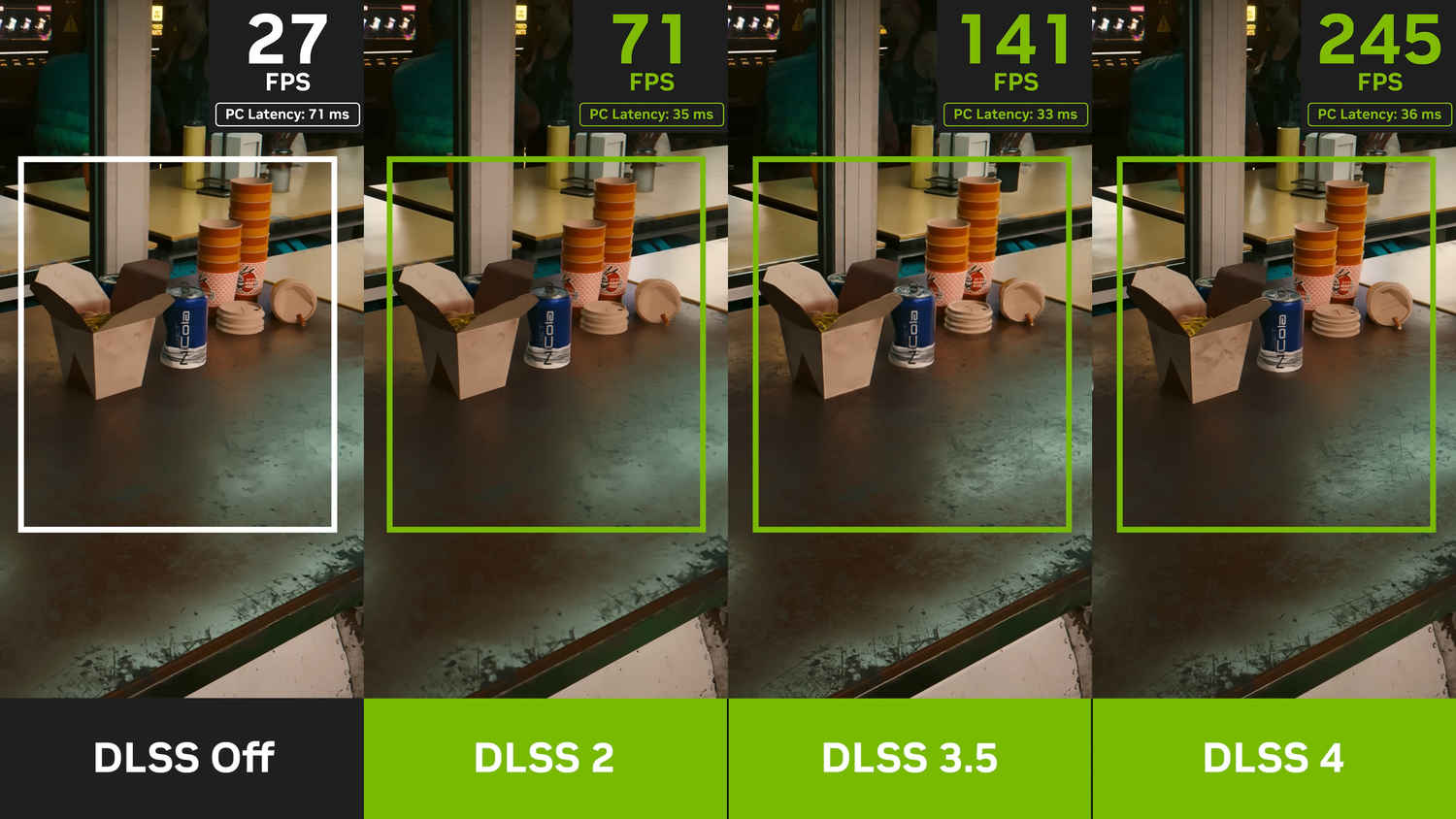
DLSS 3 introduced Frame Generation and Ray Reconstruction alongside Super Resolution, delivering 200–300% FPS gains but with occasional pacing hiccups and artifacts.
DLSS 4 swaps to a transformer-based model, enabling Multi-Frame Generation (up to three synthetic frames) and Hardware Flip Metering for smoother, more consistent frame delivery.
NVIDIA’s Deep Learning Super Sampling technology has fundamentally changed how we think about gaming performance, and with the recent launch of DLSS 4, the technology has taken another significant leap forward. But what exactly makes DLSS 4 different from its predecessor, and should you care about these changes?
 Survey
Whether you’re considering an RTX graphics card upgrade or simply curious about the technology powering today’s most demanding games, understanding the evolution from DLSS 3 to DLSS 4 reveals fascinating insights into how graphics processing is advancing.


Understanding DLSS: The Foundation
Deep Learning Super Sampling (DLSS) has changed how graphics cards handle image rendering. Rather than processing every pixel at your target resolution, DLSS renders the game at a lower resolution and uses trained neural networks to reconstruct a higher-quality image. This approach delivers the visual fidelity you want whilst maintaining the performance you need.
The technology relies exclusively on NVIDIA’s Tensor Cores, which are specialised processing units found in RTX graphics cards. These cores handle the complex mathematical operations required for the neural network processing, making DLSS impossible to implement on graphics cards without this dedicated hardware.
What makes DLSS particularly clever is its training methodology. NVIDIA uses its Saturn V supercomputer to train the neural networks by comparing lower-resolution images with “perfect” reference frames rendered at 64 times the target resolution. This training process teaches the system to recognise patterns and reconstruct missing details with remarkable accuracy.
DLSS 3: The three-pillar approach
DLSS 3 introduced an entirely new approach to performance enhancement through three distinct technologies working together. The foundation remains Super Resolution, which handles the core upscaling functionality that made DLSS famous. This technology analyses multiple lower-resolution frames along with motion data to reconstruct higher-resolution output that often rivals or exceeds native rendering quality.
The game-changer came with Frame Generation, a technology that creates entirely new frames between traditionally rendered ones. By analysing motion vectors and pixel data from previous frames, DLSS 3 can generate intermediate frames that smooth out gameplay whilst dramatically boosting frame rates. This technology particularly benefits scenarios where the CPU becomes a bottleneck, as the generated frames don’t require additional CPU processing.
Ray Reconstruction completes the trio by enhancing ray-traced lighting effects. Traditional denoising techniques often struggle with ray-traced reflections and global illumination, leading to blurry or inaccurate lighting. Ray Reconstruction uses trained neural networks to clean up these effects whilst preserving the sharp detail and accurate lighting that makes ray tracing so appealing.
Also read: Should you undervolt your laptop?
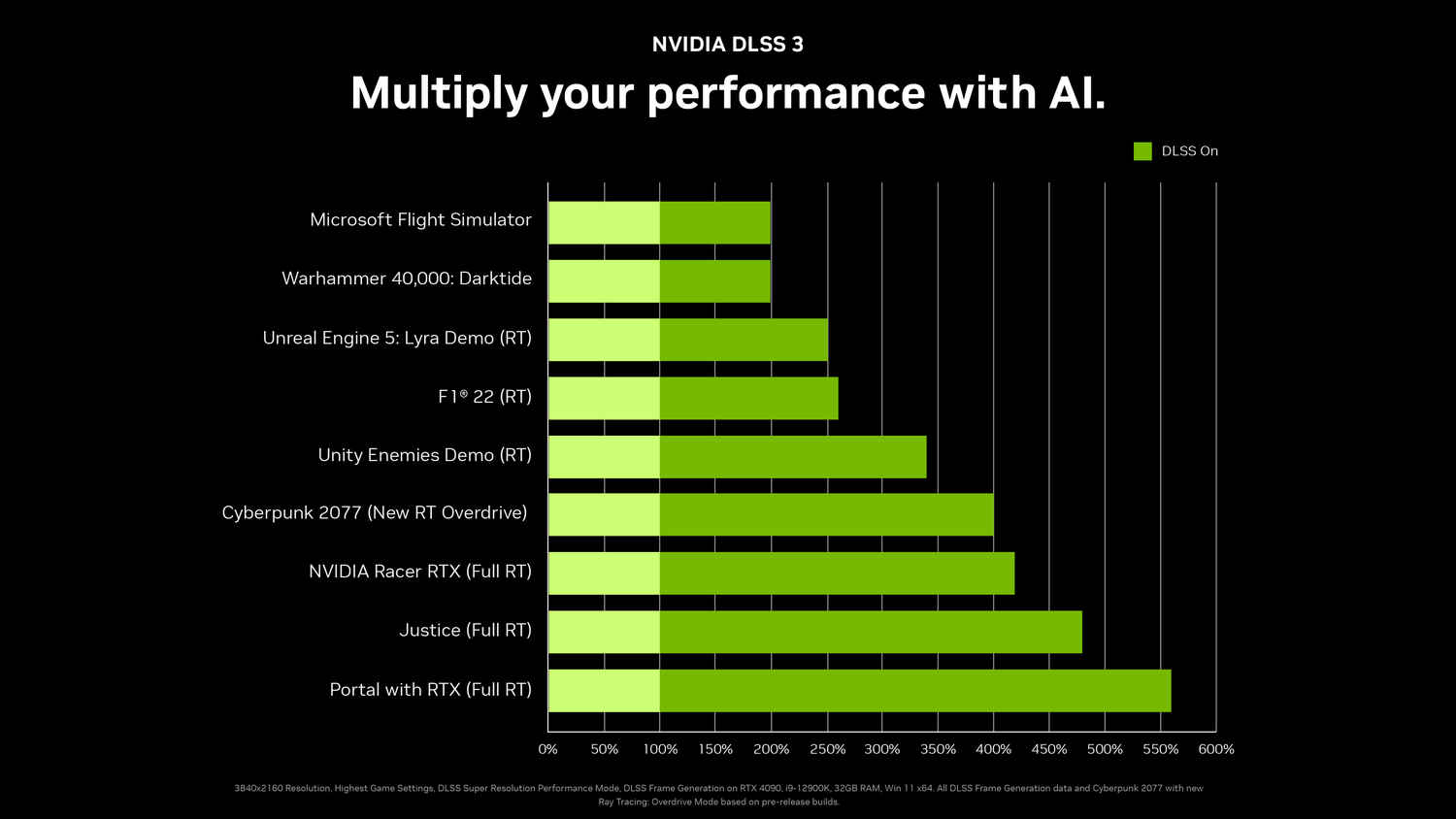
The performance improvements with DLSS 3 can be substantial, often delivering 200-300% performance increases in optimal conditions. However, the technology does have limitations, particularly around frame pacing consistency and occasional visual artifacts in fast-moving scenes.
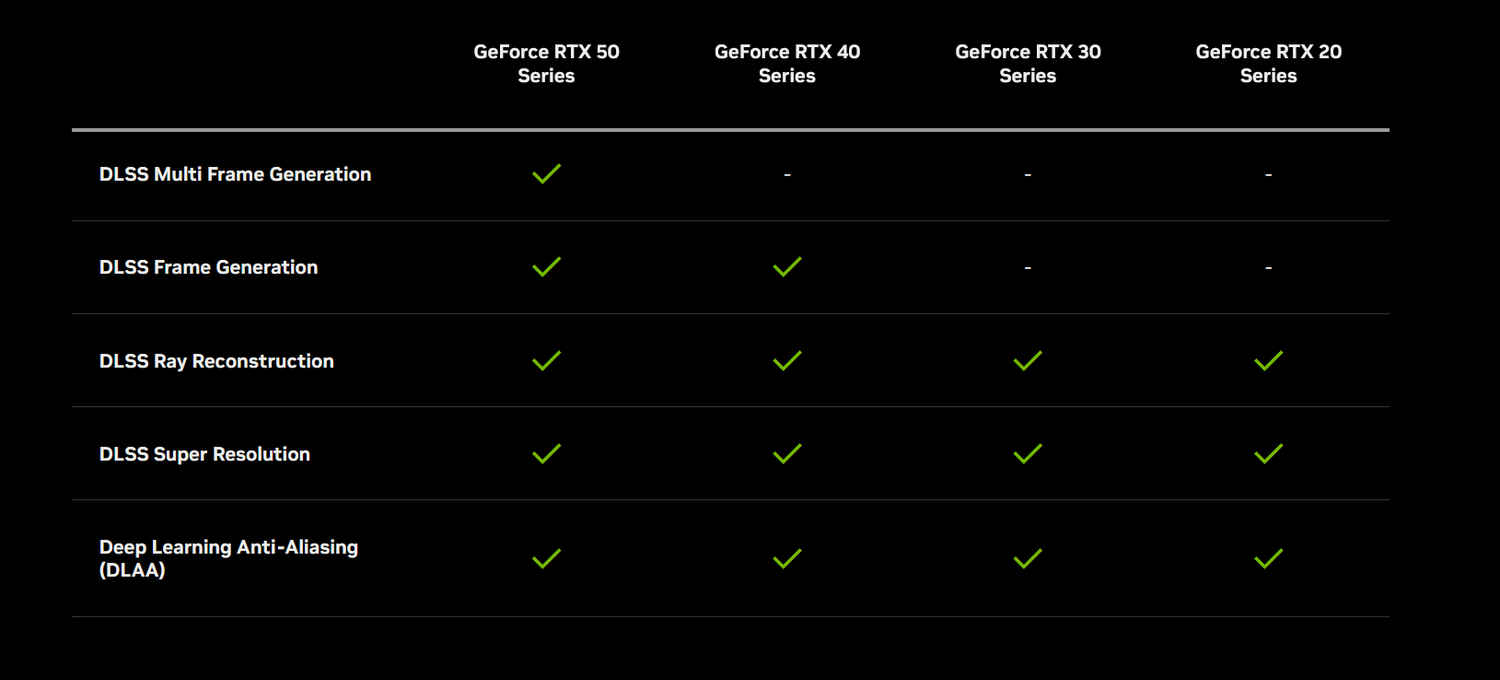
DLSS 3 works across RTX 20, 30, and 40-series graphics cards, though Frame Generation remains exclusive to RTX 40-series cards due to hardware requirements. The technology supports various quality modes, from Ultra Performance for maximum frame rates to Quality mode for the best visual fidelity.
DLSS 4: The transformer game
DLSS 4 is more than an incremental upgrade; it’s a fundamental reimagining of the underlying technology. The most significant change lies in the shift from Convolutional Neural Networks to Transformer-based architecture. This change allows the system to analyse relationships between pixels across much larger areas of the image, leading to a better understanding of complex scenes and more accurate reconstruction.
The Transformer model processes twice as many parameters as previous DLSS versions, enabling it to handle intricate details like complex geometry, subtle shadows, and nuanced reflections with greater precision. This enhanced processing power translates directly into improved image quality, particularly in challenging scenarios that previously caused issues for earlier DLSS versions.
Multi-Frame Generation stands as DLSS 4’s marquee feature, exclusive to RTX 50-series graphics cards. Unlike DLSS 3’s single generated frame, DLSS 4 can create up to three additional frames for every traditionally rendered frame. This capability dramatically amplifies performance gains whilst maintaining visual quality.
The implementation of Hardware Flip Metering addresses one of DLSS 3’s primary weaknesses: frame pacing. By moving frame timing control from software to hardware, DLSS 4 delivers more consistent frame delivery and smoother gameplay. The enhanced display engine, with twice the pixel processing capability of previous generations, supports this improved frame handling.
Also read: What is TGP and why it matters for gaming laptops
Performance improvements with DLSS 4 are impressive even compared to DLSS 3. Early benchmarks suggest 15% or greater frame rate improvements over DLSS 3.5, with some scenarios achieving up to 8 times the performance of traditional rendering. The technology also reduces VRAM usage by approximately 30% compared to DLSS 3, providing additional headroom for higher resolution textures and more complex scenes.
Technical architecture: CNN vs Transformer
The architectural differences between DLSS 3 and DLSS 4 extend far beyond simple performance improvements. DLSS 3’s Convolutional Neural Network approach excels at local pattern recognition, analysing small areas of pixels to determine appropriate upscaling. This method works well for many scenarios, but can struggle with complex relationships between distant parts of the image.
Transformer architecture, by contrast, uses self-attention mechanisms that can consider relationships between any pixels in the image, regardless of their distance from each other. This capability proves particularly valuable when reconstructing complex geometry, accurately rendering reflections that span large portions of the screen, or maintaining detail in areas with intricate lighting interactions.
Also read: Is your laptop bottlenecked by power limits? Understanding PL1, PL2, and TDP
The training process for DLSS 4’s Transformer model requires significantly more computational resources but results in a more sophisticated understanding of visual relationships. This enhanced training translates into better handling of edge cases that might cause artifacts in earlier DLSS versions.
Processing efficiency also improves with the Transformer approach. Despite handling more complex calculations, the optimised architecture and RTX 50-series hardware combine to deliver better performance per watt, making DLSS 4 more efficient overall.
Visual quality improvements
The visual improvements between DLSS 3 and DLSS 4 become apparent in demanding scenarios. DLSS 4’s enhanced architecture significantly reduces ghosting artifacts, particularly around moving objects with complex edges. This improvement makes fast-paced games more enjoyable and reduces the visual compromises previously associated with performance-focused settings.
Ambient occlusion and diffuse lighting benefit considerably from DLSS 4’s advanced processing. These subtle lighting effects, which contribute significantly to visual realism, maintain their accuracy even during upscaling. The result is images that not only match native resolution quality but often exceed it through superior anti-aliasing and detail enhancement.
Reflections and ray-traced effects receive particular attention in DLSS 4. The Transformer model’s ability to understand long-range pixel relationships allows for more accurate reconstruction of reflective surfaces and complex lighting interactions. This capability proves especially valuable in modern games that rely heavily on ray tracing for visual impact.
Edge cases that previously challenged DLSS, such as thin geometry, particle effects, and rapidly changing lighting conditions, show marked improvement with DLSS 4. The enhanced neural network architecture provides more robust handling of these challenging scenarios whilst maintaining the performance benefits that make DLSS attractive.
Performance analysis and hardware requirements
DLSS 4’s performance improvements stem from both architectural enhancements and hardware optimisations. The RTX 50-series graphics cards feature fifth-generation Tensor Cores specifically designed to handle Transformer model calculations efficiently. This hardware-software co-design approach ensures optimal performance whilst maintaining the visual quality improvements.
Multi-Frame Generation’s impact on performance varies depending on the specific game and hardware configuration. In CPU-limited scenarios, which are increasingly common with modern games, the ability to generate multiple frames without additional CPU overhead provides substantial benefits. GPU-limited scenarios still benefit, though the improvements may be less dramatic.
Memory efficiency improvements in DLSS 4 provide additional advantages beyond raw performance. The 30% reduction in VRAM usage allows for higher resolution textures, more complex geometry, or additional visual effects within the same memory budget. This efficiency proves particularly valuable at 4K resolution and beyond, where VRAM limitations can constrain visual quality.
Power consumption considerations become increasingly important as graphics cards grow more powerful. DLSS 4’s improved efficiency means better performance per watt, which translates into lower temperatures, quieter operation, and reduced electricity costs during extended gaming sessions.
Game support and implementation
DLSS 4 launched with support for over 75 games, demonstrating strong developer adoption of the technology. This extensive launch library includes both new releases designed with DLSS 4 in mind and updated versions of existing titles that benefit from the enhanced capabilities.
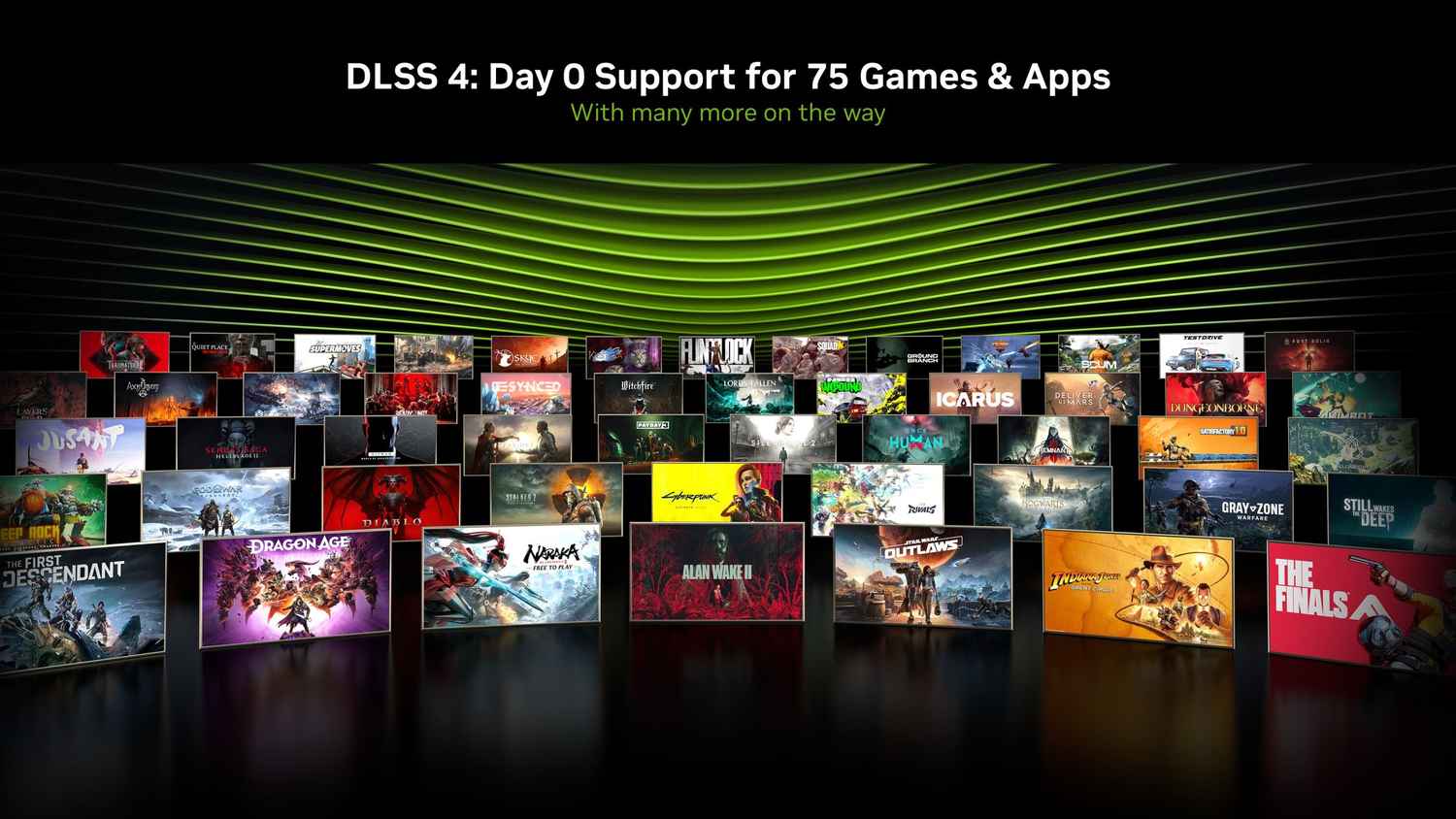
The implementation process for developers has been streamlined compared to earlier DLSS versions. NVIDIA’s developer tools and documentation have evolved to make integration more straightforward, encouraging broader adoption across different game engines and development teams.
DLSS Override functionality allows users to force DLSS 4 in supported games, even when developers haven’t explicitly enabled the latest version. This feature ensures that users can benefit from DLSS 4’s improvements across a broader range of titles while developers work on official implementations.
Compatibility considerations between DLSS versions mean that games supporting DLSS 3 will generally work with DLSS 4, though users won’t access the full benefits without proper implementation. This backward compatibility ensures a smooth transition for both developers and users.
Competitive landscape and future outlook
DLSS 4’s advancements come at a time when competition in upscaling technology continues to intensify. AMD’s FidelityFX Super Resolution and Intel’s XeSS provide alternatives, but DLSS 4’s Transformer architecture and hardware integration maintain NVIDIA’s technological lead in this space.
The implications of DLSS 4 extend beyond gaming into professional graphics, video streaming, and virtual reality applications. The improved efficiency and quality could enable new use cases while reducing the computational requirements for high-quality visual experiences.
Future developments in DLSS technology seem likely to focus on further efficiency improvements, broader hardware support, and integration with emerging display technologies. The foundation provided by DLSS 4’s Transformer architecture creates opportunities for continued advancement as both hardware capabilities and software techniques evolve.
The sustainability benefits of DLSS 4 shouldn’t be overlooked. By delivering higher visual quality whilst reducing power consumption, the technology contributes to more environmentally responsible gaming whilst providing better user experiences.
 Follow Us
Sagar Sharma
A software engineer who happens to love testing computers and sometimes they crash. While reviving his crashed system, you can find him reading literature, manga, or watering plants. View Full Profile


