
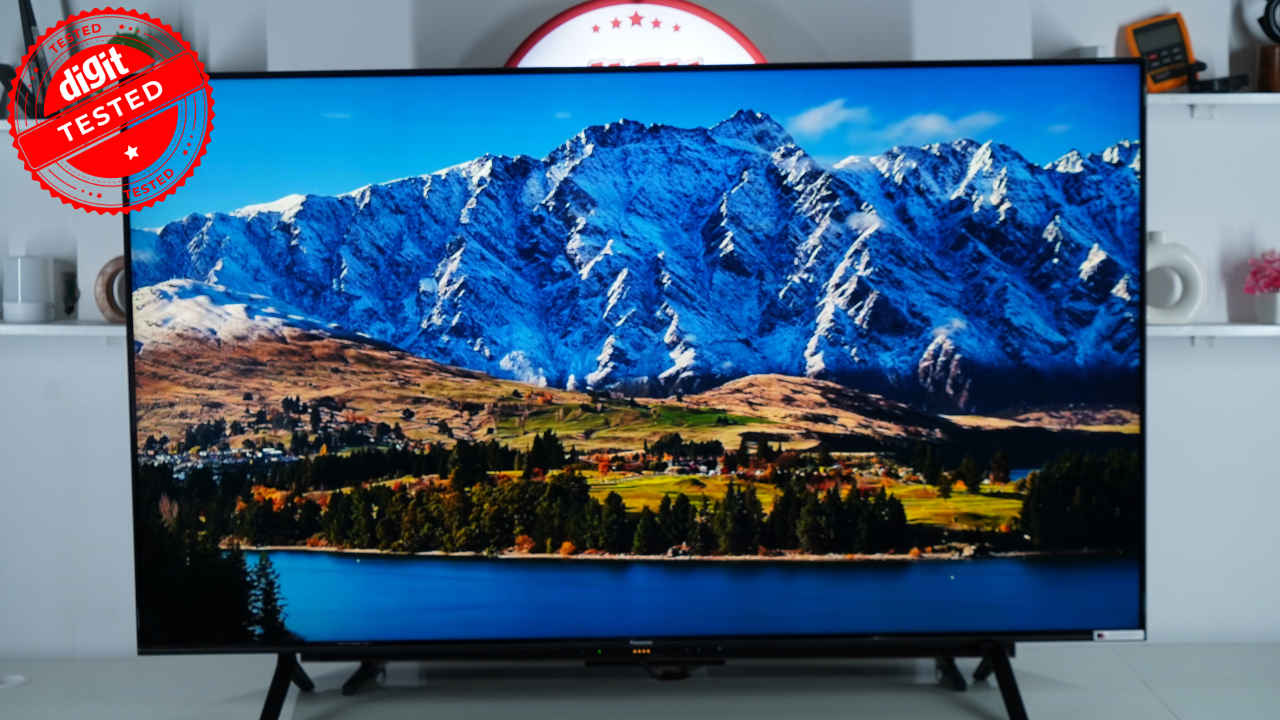
Panasonic’s 65-inch TH-65PX950DX Mini LED TV is a premium mid-range TV and a part of its Shinobi Pro series. At its current price of about Rs 1,70,000, the TV offers flagship features like a 4K HDR panel with quantum dots, a proprietary colour engine and support for Dolby Vision, HDR10+, 66W speakers with built-in tweeter, Dolby Atmos, HDMI 2.1 and Google TV software. We have extensively used these features for some time now, and here’s how the Mini LED TV stacks up for the asking price.
Verdict
The Panasonic TH-65PX950DX offers 4K HDR visuals with broad HDR support, strong 66W Dolby Atmos audio, and smooth Google TV performance. Its contrast and 60Hz refresh rate lag behind OLEDs and higher-end Mini LED rivals, but it delivers a bright and beautiful HDR screen with solid tone mapping and robust sound for the asking price. Therefore, it can be a dependable pick for those seeking a high-end 4K TV experience at about Rs 170,000.
Panasonic PX950DX TV specifications
- Model: TH-65PX950DX
- Display: 65-inch, Mini LED
- Panel type: IPS-Black LCD
- Display resolution: 3840 x 2160 (4K)
- Native refresh rate: 60Hz
- Supported HDR formats: HDR10+, Dolby Vision
- Speakers: 66W
- Audio formats: Dolby Atmos, DTS Studio Sound
- Software: Google TV (Android TV 11)
- Screen mirroring: Chromecast, Airscreen
- HDMI: 4 HDMI ports, ALLM, ARC/eARC (on HDMI 1)
- Processor: 4x Cortex A73 chip (MediaTek MT5889)
- Memory: 2 GB RAM, 32 GB ROM
- Other connectivity options: 2x USB ports, dual-band Wi-Fi 5, Bluetooth, Digital Audio Out, Antenna In, LAN, AV In, MirAIe for smart home network
- Price: Rs. 1,70,530 (on Panasonic website)
Display test
The Panasonic PX950 Mini LED TV is available in two screen sizes in India: a 75-inch model and a 65-inch model, which is our review unit, sent to us by the brand. Based on our tests and over 2,000:1 contrast ratio, the TV appears to have an IPS-Black panel. This and the Mini LED backlighting offer deep blacks and rich colours at 4K resolution.
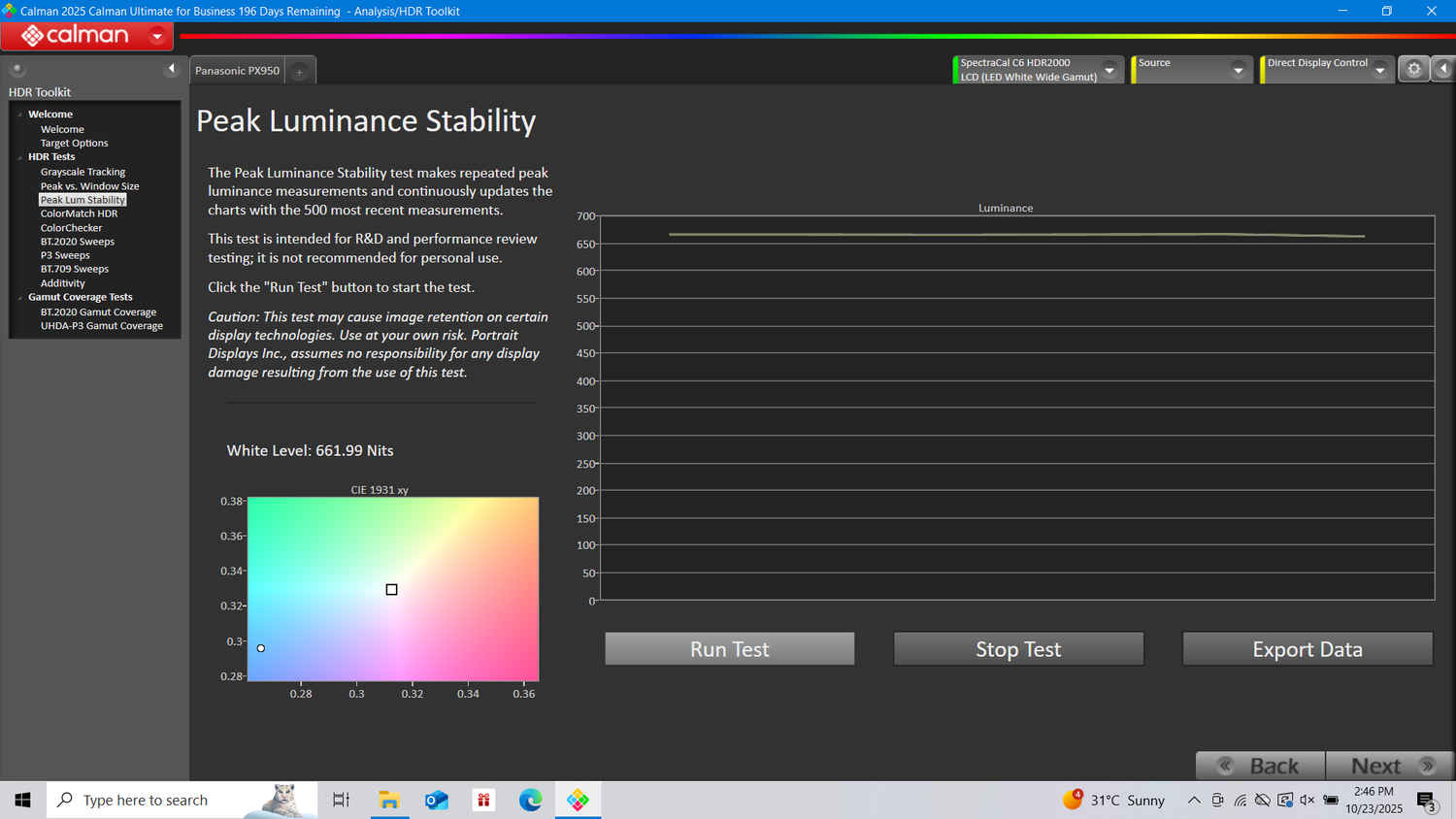
The viewing angles are fine, and there is no noticeable backlight bleeding. In our lab tests using a Colourimeter and professional-grade Calman software, the TV reached a peak luminance of 661 nits in HDR (Vivid picture) mode, while black levels were recorded at 0.31 nits (HDR). This results in a contrast ratio of around 2,132:1, which is decent for an IPS-based Mini LED display. The Mini LED backlighting helps reduce blooming around bright highlights, but the light precision isn’t as good as our reference device.
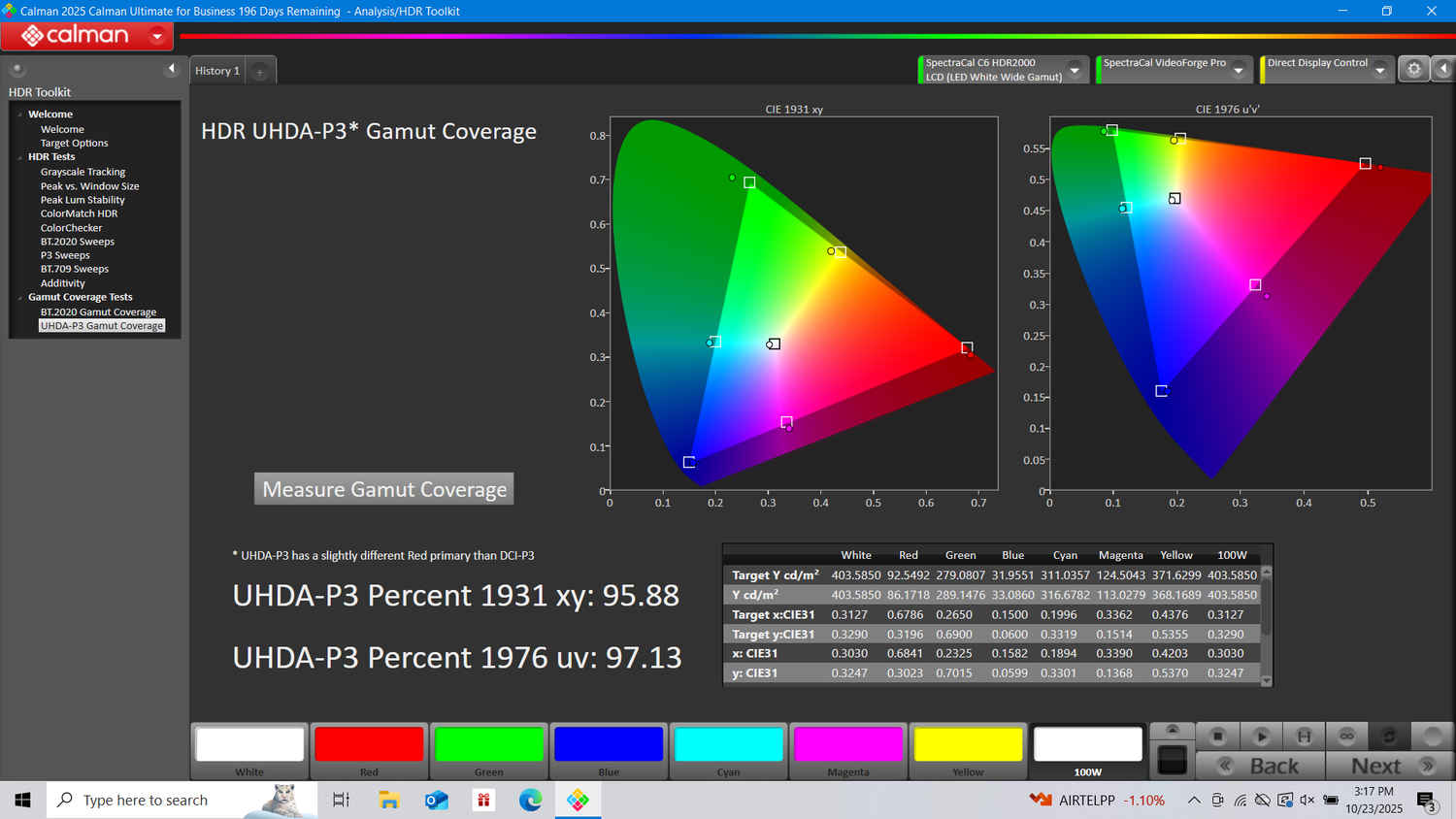
Colour performance is one of the PX950’s strengths. In SDR mode, the TV covers 93.6% of the BT.709 colour gamut, which ensures natural and balanced tones for regular TV shows, news, and cable content. In HDR mode, it reproduces 97.13% of the UHDA-P3 gamut (similar to DCI-P3) and 81.13% of the wider BT.2020 spectrum, which is impressive. Colours appear rich but not oversaturated, and skin tones maintain realism across different lighting conditions.
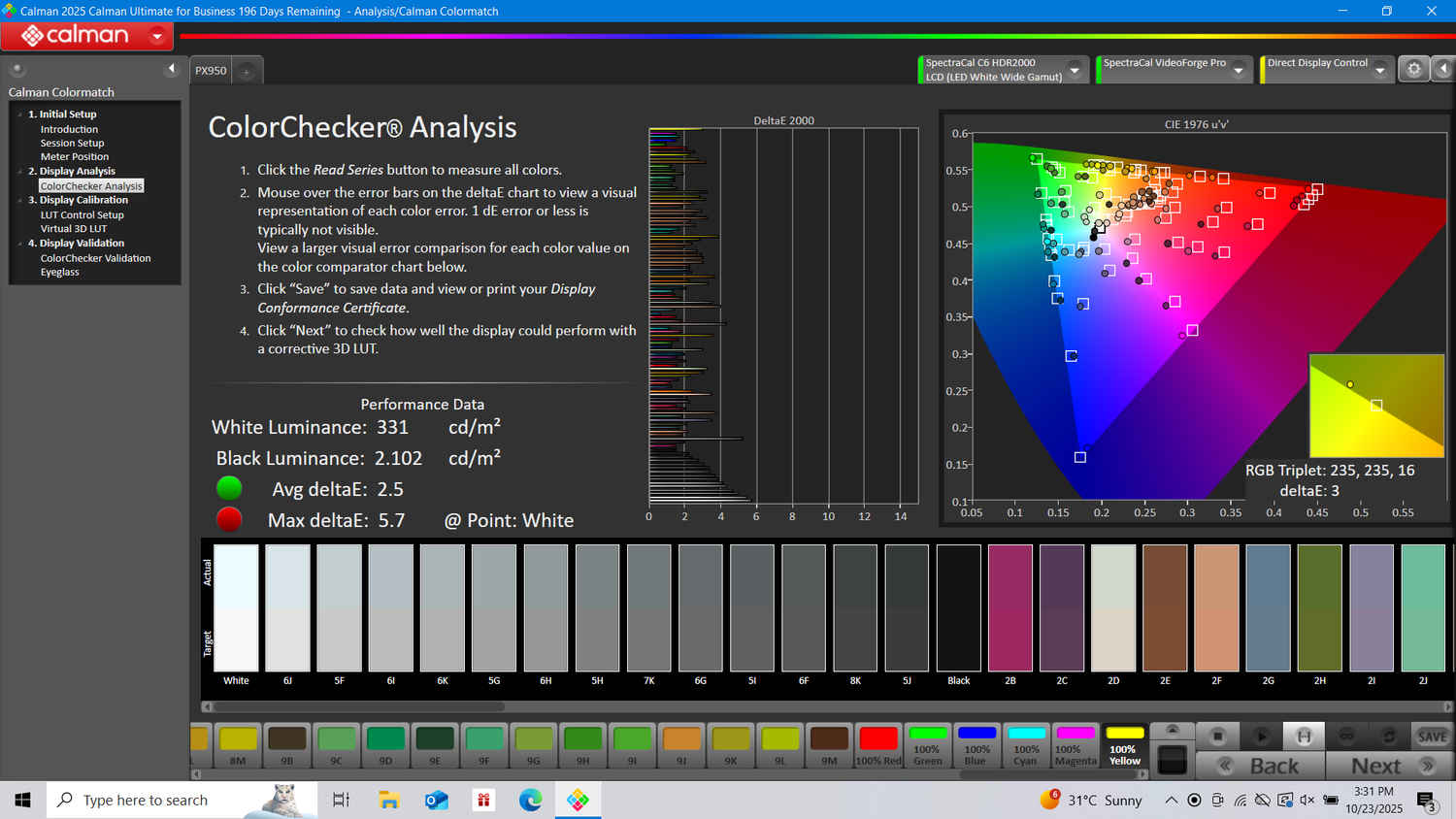
In our colour accuracy test, the TV returned an average Delta E of 4.6 in SDR and 2.5 in HDR. A lower Delta E value indicates better colour accuracy, so the HDR results here are quite good, while SDR could use some fine-tuning for precise colour fidelity.
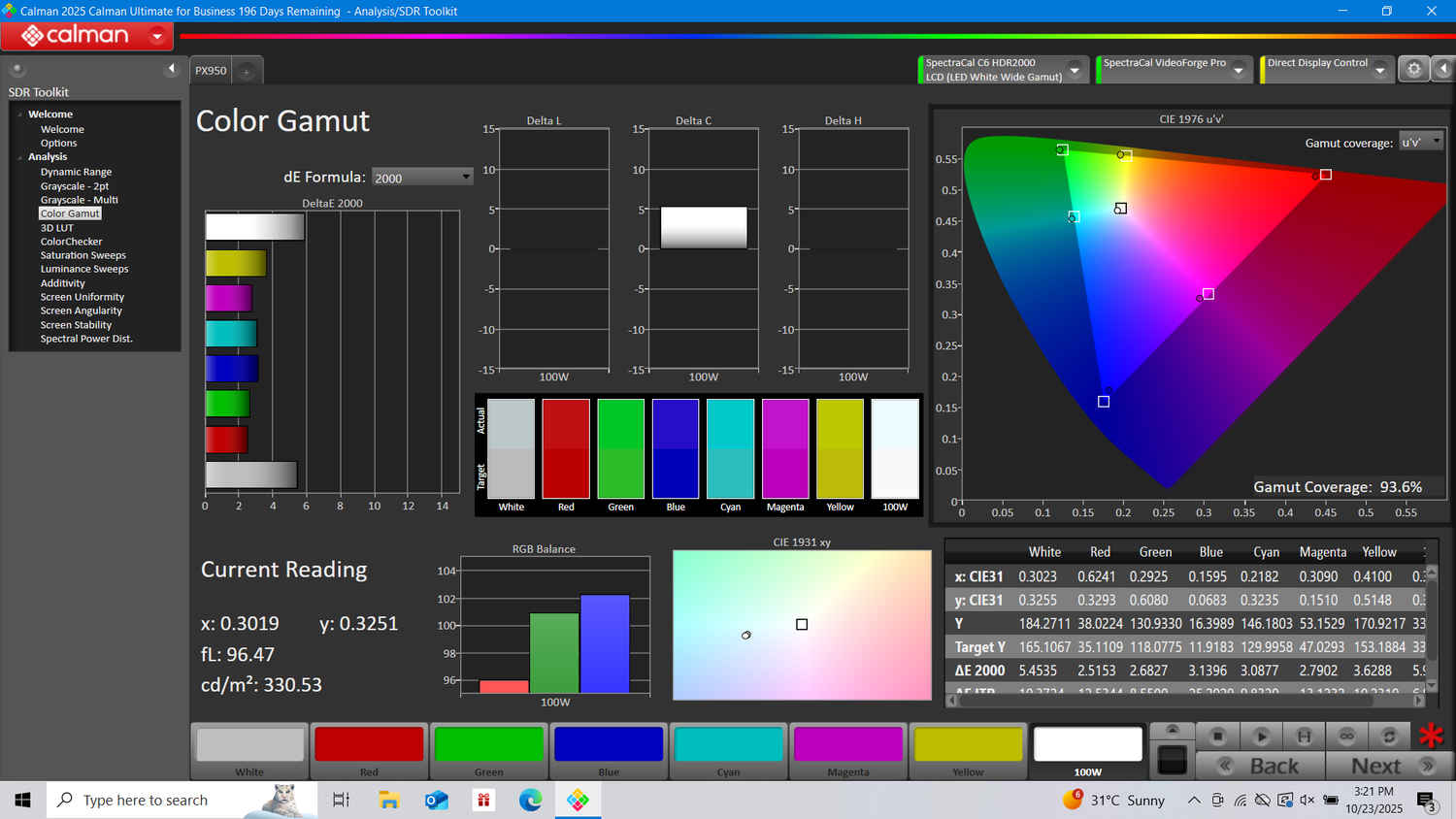
Let’s now see how these figures translate to real-world viewing:
The TV looks better in person than it does in these photos.
Viewing experience
In real-world viewing, we used the Movie mode to get closer to the creator’s intent, though the TV also offers other modes such as Vivid, Sports, Energy Saving, and Game. We kept MEMC off to avoid the soap opera effect and preserve natural motion.
During testing, the Panasonic PX950 performed consistently across different content types. In The Revenant, the fire scene showed a faint halo around bright flames. The effect wasn’t distracting, but it was visible in dark backgrounds.
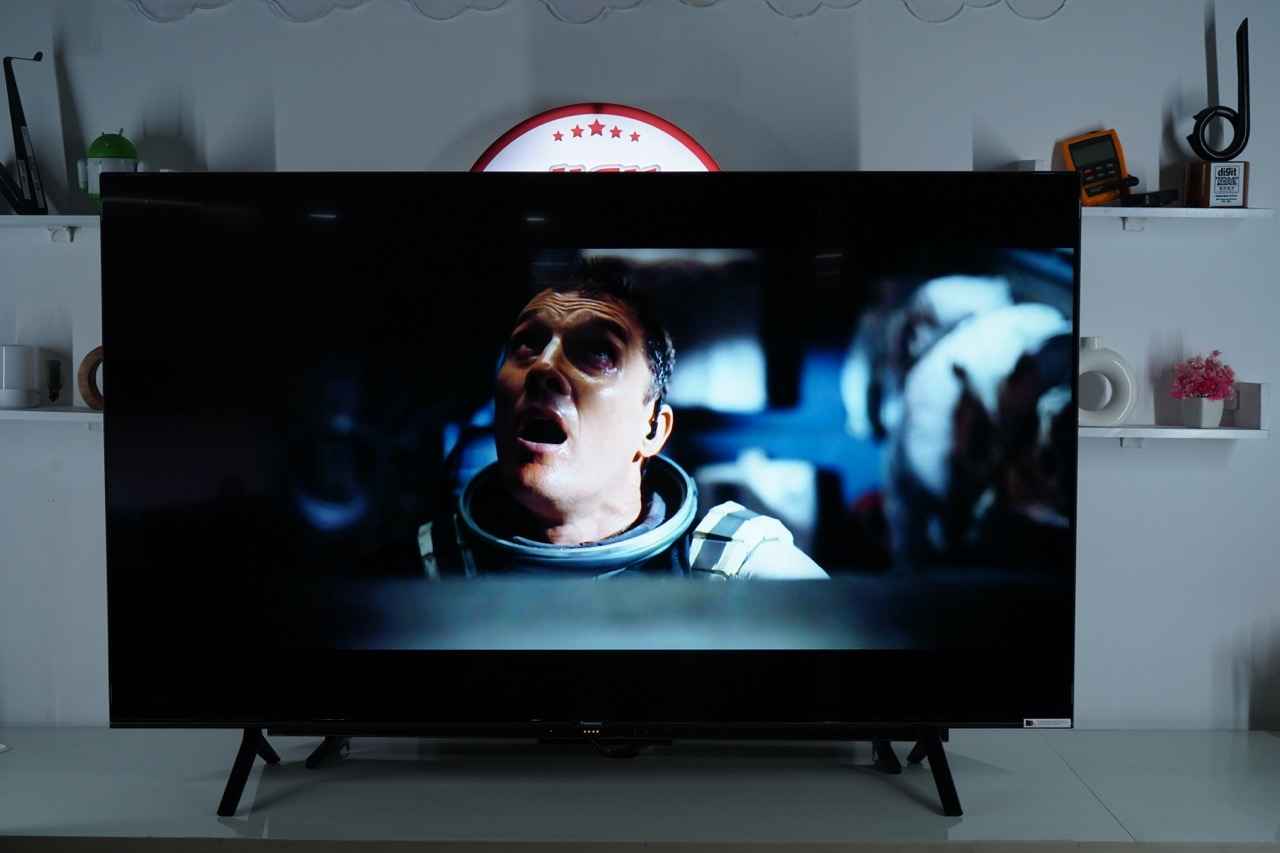
In the docking scene from the movie Interstellar, the sweat and facial features of Matthew McConaughey, and the glowing event horizon of a nearby black hole (Gargantua) resembled the reference screen. In Dunkirk, too, the bright light sources and fire explosions were sharp and well-controlled, though not as precise or contrast-rich as on our reference display.
In Severance, the TV rendered skin tones evenly, maintaining accurate colour balance and contrast across moderate viewing angles. While pixel peeping, we noticed the screen has a cooler temperature than our reference screen.
Also Read: Philips 8100-series 50-inch 4K QLED TV review: Lots of features and modest performance
Motion handling in Gemini Man was fine, with no visible judder or tearing, but it’s worth noting that the PX950 supports only a 60Hz native refresh rate. You could get a 120Hz panel from competing models in this price range, which provide smoother motion in fast-paced action scenes or gaming.
Overall, the Panasonic PX950 delivers strong brightness and wide colour coverage that enhance HDR playback, supported by the benefits of Mini LED backlighting. However, given its premium price, its contrast performance and black levels will struggle against competition from similarly priced OLED options.
Design and connectivity
The main unit without the stands weighs around 24 kg, and it’ll take some effort to lift and set it up on a desk or mount it. We propped it up on a desk. The inverted V-shaped stands are metal-built and strong.
The PX950’s screen has extremely slim bezels on all three sides, and the bottom side has a notable chin with the Panasonic logo. Beneath this chin, you get buttons to power on/off the TV, change volume, input source, and also a slider for turning the mic on and off.
The bundled remote has a familiar look to some other remotes I have seen: a circular navigation button with buttons on top and bottom. The top half has the power button, Google Assistant Button and a Settings menu button. In the latter half, you get OTT hotkeys (Netflix, Prime Video, YouTube, etc.), home button, back button, volume rocker, mute button, live TV button, and an input button.
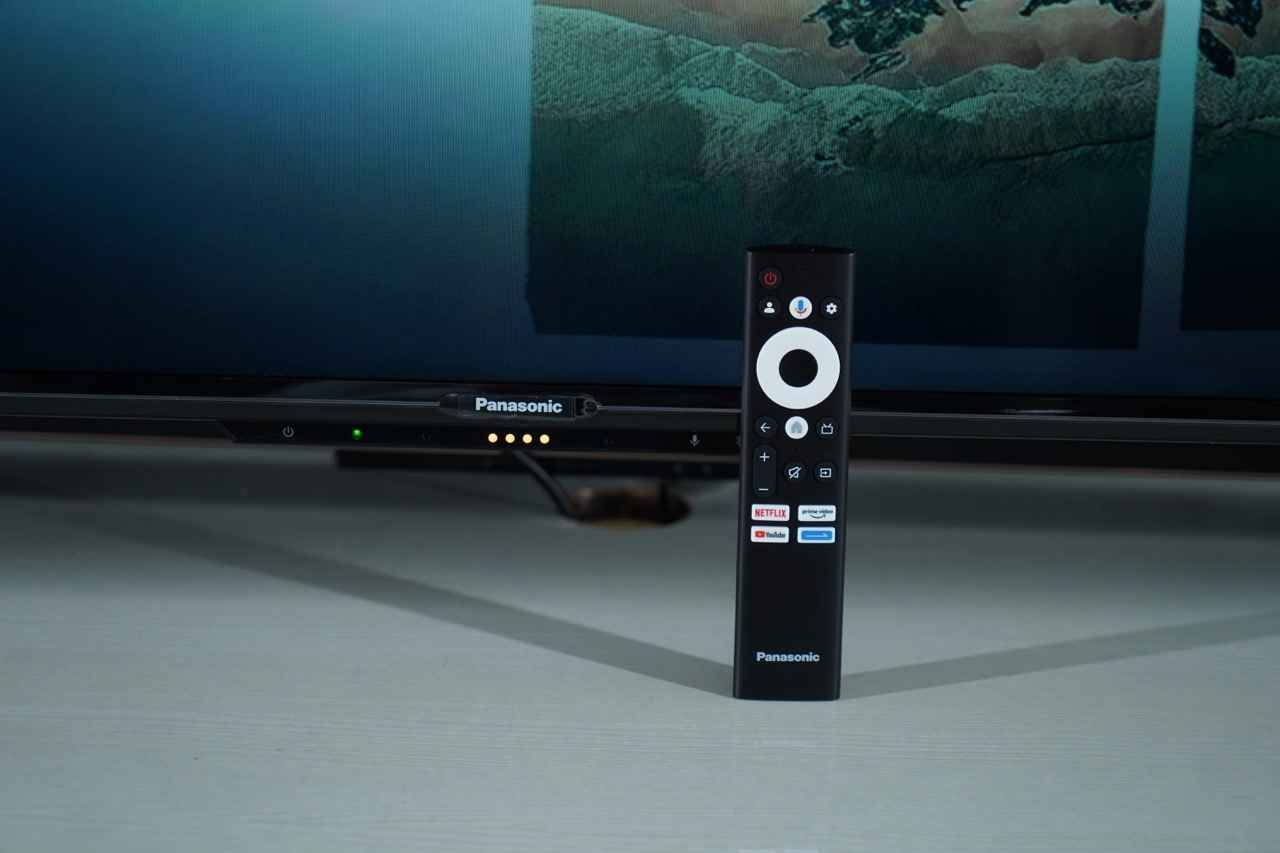
The remote can work over Bluetooth, which adds to the convenience of using the TV. That brings us to its connectivity options.
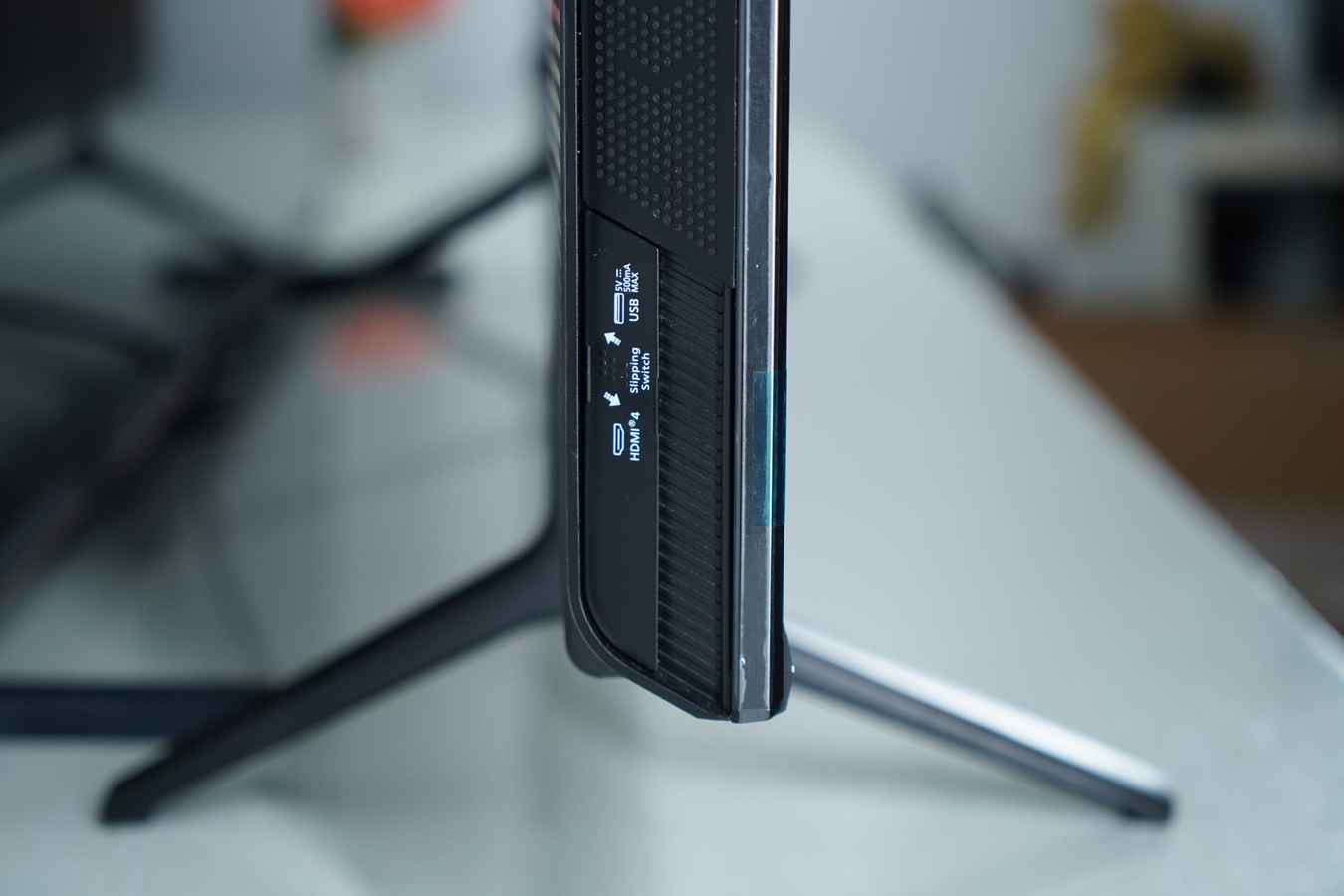
On the back of the TV reside the different ports: four HDMI 2.1 ports, 2 USB ports, Digital Audio Out, LAN, Antenna In, and AV In. One of these HDMI and USB-A ports is situated on the left side of the TV with a slide-in cover. Since you would mostly have use with these two ports, it is good that they are placed in an easily accessible place.
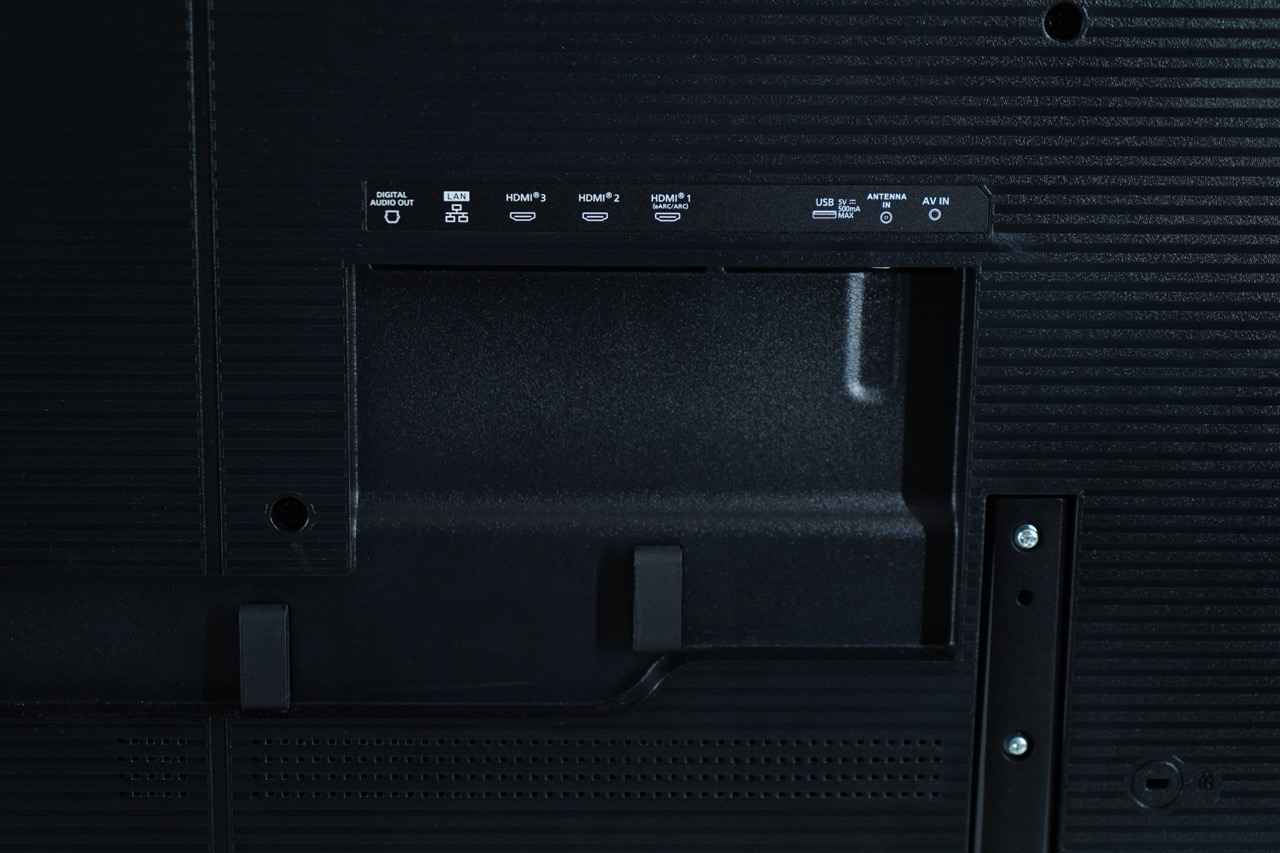
Thanks to HDMI 2.1, the Auto Low Latency Mode (ALLM) in Game Mode reduces input lag, and casual gamers can feel a more responsive and smoother gameplay experience.
Now that we have covered what’s outside, let’s check out what Panasonic has packed inside the TV:
UI and audio
The Panasonic TV boots Google TV based on Android TV 11 OS. The TV has the June 2025 security patch at the time of writing this review. The Google TV interface is one of the most refined and user-friendly UI out there for modern Android TVs. Google TV shows content by genre and moods from different OTT platforms. So you may chance upon or easily find content you like. On top of that, you get access to a wide library of TV apps and videos on the Google Play Store. The UI feels smooth enough, so no hiccups sailing through the different screens and menus.
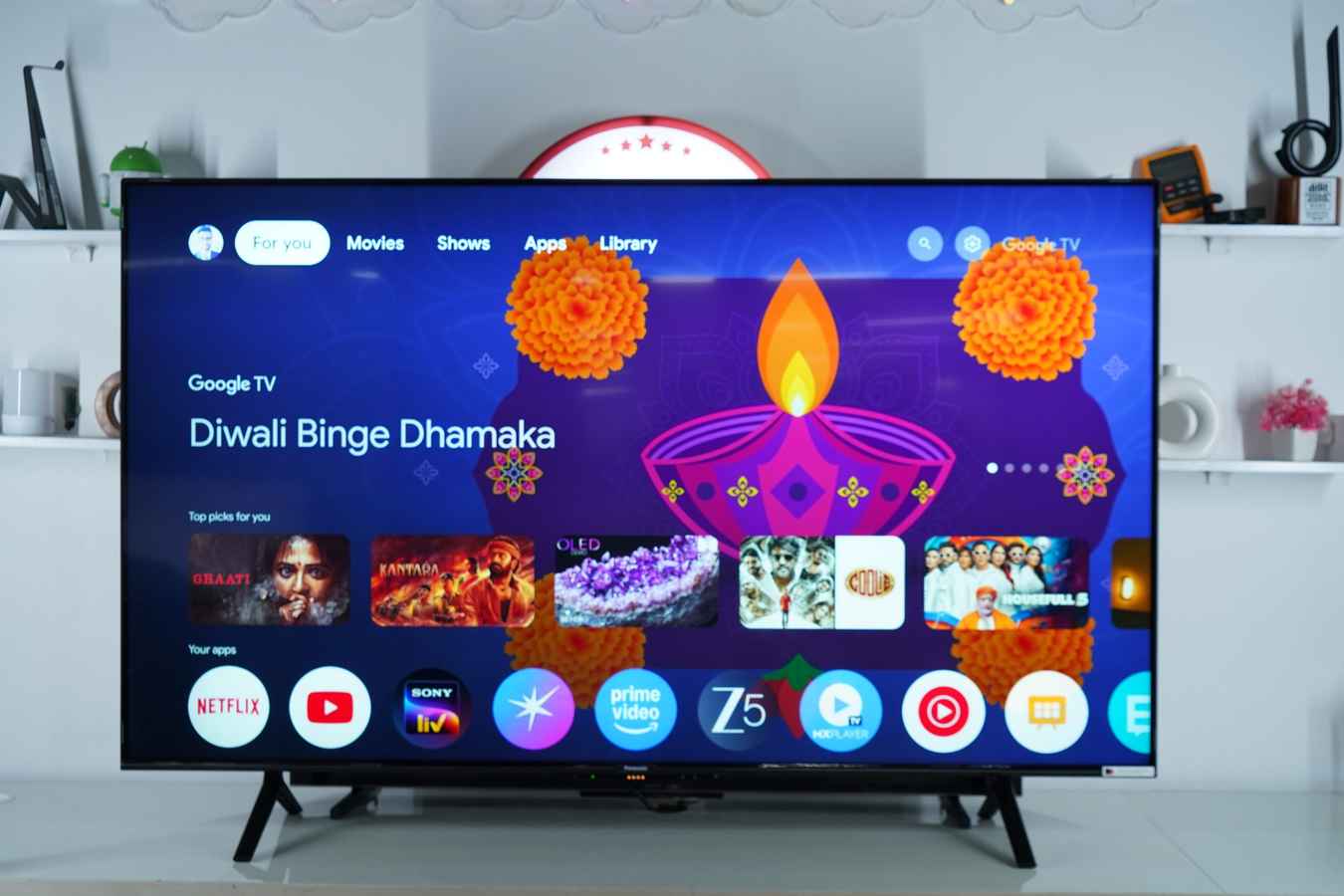
And at times when you want to project what’s playing on your screen to the big screen, Chromecast functionality should come in handy.
Coming to audio, the 66W speakers sound loud and clear, with decent bass thanks to a built-in tweeter. For surround sound and other sound enhancements, you can enable Dolby Audio processing (including Dolby Atmos). If you don’t like the processing, keep it off.
Should you buy it?
The Panasonic TH-65PX950DX is a well-built 65-inch Mini LED TV that stands out for its bright, largely colour-accurate 4K HDR display and powerful 66W speakers with Dolby Atmos. It brings a premium viewing and audio experience backed by solid connectivity options like four HDMI 2.1 ports and Google TV software that feels decently fluid and familiar. For most users upgrading from a standard LED TV, it offers a meaningful step-up in clarity, colour depth, and overall experience.
That said, the PX950DX has its limits. The native contrast ratio of around 2,132:1, while decent for an IPS-type Mini LED panel, still falls short of what you get from OLEDs or higher-end VA-based Mini LED TVs in this range. Blooming around highlights, a cool colour tone, and a 60Hz native refresh rate also remind you that this isn’t built for the most discerning cinephiles or gamers. At around Rs 1,70,000, alternatives like the LG C5 OLED, Samsung S85F OLED, LG QNED90T Mini LED and Sony Bravia 7 Mini LED can offer better contrast and motion performance if you value deeper blacks or smoother gaming.
Still, the Panasonic PX950DX redeems itself with balanced brightness, rich HDR colour output, agreeable tone mapping, and strong audio quality. It’s a reliable choice for users who prefer a bright, punchy display, modern connectivity, and a clean Google TV experience without jumping to OLED territory.
Keep reading Digit.in for similar TV reviews.
Also Read: Sony Bravia 5 Mini LED TV Review: Bright, accurate and built for cinematic purists
Panasonic TH-65PX950DX TV Key Specs, Price and Launch Date
| Release Date: | |
| Market Status: | Launched |
 Follow Us
G. S. Vasan
G.S. Vasan is the chief copy editor at Digit, where he leads coverage of TVs and audio. His work spans reviews, news, features, and maintaining key content pages. Before joining Digit, he worked with publications like Smartprix and 91mobiles, bringing over six years of experience in tech journalism. His articles reflect both his expertise and passion for technology. View Full Profile


