Top AI agents of 2025 transforming work, learning, and productivity
Claude, Devin, ChatGPT, Manus: Best AI tools to try now
2025’s most advanced AI assistants you can use today
In 2023, AI was still mostly about chatbots. Fast forward to 2025, and we’re now living in the age of AI agents – powerful, goal-oriented digital beings that don’t just respond to prompts but actively think, plan, and execute on your behalf.
 Survey
Whether you’re a student juggling research deadlines, a software engineer debugging a massive codebase, or just someone trying to manage their inbox and calendar without going mad, there’s now an AI agent for you. These aren’t just assistants. They’re co-pilots, collaborators, and, in some cases, full-blown team members.


Here are the top five AI agents of 2025 that are redefining how we work, think, and live.
Also read: From Microsoft to Google and OpenAI: These 5 AI agents are pushing boundaries of AI
Claude 3.5: Capable and shockingly human
Anthropic’s Claude 3.5 is often described as the “friendliest genius” in the AI world. Trained with a strong emphasis on safety and tone, it’s an AI agent that manages to be both incredibly smart and emotionally aware. Claude can analyze entire research papers, craft compelling writing, help with legal analysis, and even keep track of ongoing conversations thanks to its growing memory capabilities.
Professionals love it for its accuracy and judgment. Students love it because it doesn’t feel intimidating. Everyone agrees, it’s the most human-sounding AI you’ll meet this year.
Try Claude if you want an AI that feels like a calm, thoughtful collaborator rather than a robot with a script.
ChatGPT Pro (GPT-4.5): Truly personalized
ChatGPT has come a long way, and in 2025, the Pro version with GPT-4.5 and customizable tools has evolved into something close to a digital Swiss Army knife.
With Study Mode, voice chat, a code interpreter, a file analyzer, DALL·E image generation, and memory, all tied into a single interface, ChatGPT Pro is more than a chatbot. It’s a fully programmable assistant with access to your preferences and history. Plus, the ability to build and use “Custom GPTs” gives users unprecedented control over how the agent behaves.
Try ChatGPT Pro if you want one agent to rule them all, whether you’re drafting emails, solving math problems, designing presentations, or just having deep philosophical debates.
Manus AI: Where agents become autonomous
One of the most exciting developments of 2025 has been the rise of agent platforms, and Manus AI leads the pack.
Rather than just chatting with you, Manus builds AI agents that operate autonomously across multiple apps, your calendar, email, Notion docs, spreadsheets, even third-party APIs. You tell it what you need (e.g., “Schedule a weekly team sync, summarize notes from our last meeting, and draft a proposal”), and it just does it. No follow-ups required.
Also read: Microsoft’s new AI agent for Windows PC: What all can it do?
This is the future of workplace productivity and it’s here now. Try Manus if you want to stop managing your to-do list and start delegating it entirely.
Perplexity Pro: Cited sources
Imagine if Google Search and an AI researcher had a baby – that’s Perplexity Pro.
It doesn’t just answer questions. It shows its work, citing websites and research papers in real-time. This makes it the tool of choice for anyone doing serious research, from journalists and analysts to students writing their thesis.
Perplexity’s interface is clean, its answers are grounded, and its ability to handle multi-hop reasoning (complex, layered queries) is unmatched.
Try Perplexity if you’re tired of hunting through search results and want direct, trustworthy answers, instantly.
Devin: The software engineer
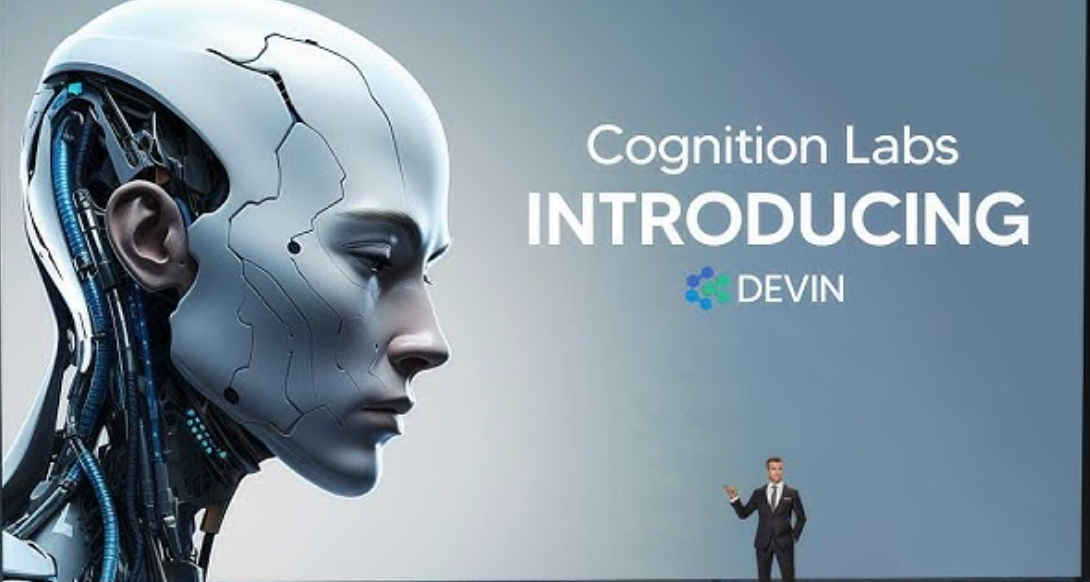
Devin, created by Cognition Labs, isn’t just another code-writing AI. It’s a fully autonomous software engineer.
It can take on entire projects, from setting up repos and writing backend logic to running tests, fixing bugs, and even deploying applications. Unlike most coding AIs, Devin can plan and adapt over time, maintaining context across tasks and iterations.
It’s already helping teams cut development time by 50–70%, and in some companies, it’s treated like a junior dev with perfect recall and zero burnout.
Try Devin if you’re a developer who wants a tireless coding buddy or a founder building fast without a big engineering team.
What’s next? More agents, more autonomy.
2025 is proving to be the tipping point for agentic AI. These tools are no longer toys, they’re becoming teammates. Some, like Pi by Inflection, specialize in emotional intelligence. Others, like Rabbit R1 and the Humane AI Pin, bring AI into your pocket and onto your lapel.
Meanwhile, companies like Meta and Google are embedding agent-like functionality directly into messaging apps and glasses, signaling a shift from “apps you open” to “AI that’s always around.”
The leap from chatbots to agents is as significant as the leap from typewriters to computers. And like the early days of the internet or smartphones, getting hands-on experience now will give you a serious edge.
So go ahead, talk to Claude. Set up a Manus agent. Ask Perplexity to explain something weird. Or let Devin handle that weekend side project. The future is already here. You just need to give it a prompt.
Also read: From AI agents to humanoid robots: Top AI trends for 2025
 Follow Us
Vyom Ramani
A journalist with a soft spot for tech, games, and things that go beep. While waiting for a delayed metro or rebooting his brain, you’ll find him solving Rubik’s Cubes, bingeing F1, or hunting for the next great snack. View Full Profile


